Tuesday, March 22, 2016

Brunching with the Borgias or Money Laundering in the Art World


There was a time when the top art buyers in the world were also its cultural leaders.  Popes, emperors, kings, and the aristocracy were the patrons of the art world, its trendsetters, and its critics.  At the top of the socio-economic ladder, they were also the most educated and sophisticated members of society.  Their tastes ruled what was fashionable and their ideas decided what was good art.  Art was once a symbol of culture and wealth.  Buying art showed you had arrived or moved up the socio-econmic ladder.  Consequently, people once bought art the way people buy new cars today.  The Medici family in Florence is the classic example of education, wealth and culture combined in art buyers and patrons during the Renaissance.

Today the highest priced work of living artists looks like no one has ever looked at it on purpose.  It's junk.  It's impossible to imagine a connoisseur of stainless steel balloon animals.  No education, culture, thought or sensitivity is necessary for the consumption of this art.  It seems incomprehensible until you understand what's really going on.  The fastest selling, highest priced art isn't bought by art lovers.  It's bought by criminals and criminal organizations to launder money.  The opacity of high level art sales is ideally suited for money laundering.  Anyone can buy a million dollar painting in complete secrecy, no questions asked.  The buyer plunks down the cash, and buys the art.  There's no oversight, no safeguards.  And apparently, that's what's going on.

The buyers of all that bazillion dollar art probably never even look at what they just bought, because it's all sold again almost immediately.  Instead of the benevolent guiding influence of cultured art patrons like the Medici, what we've got instead are the Borgias, poisoning everything before we even get to the table.

What this means for actual, living artists is that you better hang on to your hat.  None of this has anything to do with you or being an artist or making art.  Just do it.  Pay no attention to that man behind the curtain.

Deborah Dendler website
Deborah Dendler Facebook page

http://www.nytimes.com/2013/05/13/arts/design/art-proves-attractive-refuge-for-money-launderers.html?_r=0
http://www.widewalls.ch/the-art-world-money-laundering-february-2015/
http://mileswmathis.com/launder.pdf
http://www.hopesandfears.com/hopes/culture/art/214699-guide-to-laundering-money-art

Tuesday, March 15, 2016

Short artist statements and other haiku


I can't believe how much computer time goes along with being an artist today.  If you'd told me when I was in art school more than thirty years ago how much time I would spend now every day on my laptop, looking up stuff, futzing with digital photos and writing (oh, excuse me, word processing), I would haven't have believed you.  I'm doing it and I still don't believe it.

For me, the most onerous and least enjoyable parts of being an artist is writing artist statements.  I just don't see the point.  I'm a visual artist, trying to communicate visually.  Why does anyone need a written explanation?  Plus, for me, it's insulting.  It's like an admission of failure.  If I have to explain it, my work hasn't communicated whatever it was that compelled me to make it in the first place.

Right now I'm wrestling with three separate statements for three completely different things, so I can't just use one statement for all three.  Each has to be 50 words.  This is a relatively new and pernicious form of the artist statement:  the 50 word statement-as-sound byte.  What am I supposed to get across in 50 words?  I've got grocery lists longer than that.  I have one 50 worder almost finished, but the blasted thing sounds like some kind of constipated haiku translated badly from the original Sanskrit.  I'm better with a few more words, but not too many.  A hundred is good.  Five hundred starts to sound like blather.  A thousand gets really grandiose.  And then there are the places that want statements that are 1,000 characters or less.  What's a thousand characters between friends?  Well, it's about 300 words and somewhat blathery.  But manageable.

The horrible truth is that it's probably all about search engines and search algorithms.  Google searches text, so the artist statements add some words to an image so Google knows how to sort it.  The crazy thing to me is that none of this is real.  I mean, yes, the show is in a real gallery and it is really taking place, and yes, there will be cards stuck to the wall with artist statements printed on them.  But what's that got to do with anything?  Who cares, and what difference does it make?  I hate to get all existential about this, but none of it is as important as, for instance, what's the best kind of chocolate.


“An artist cannot speak about his art any more than a plant can discuss horticulture.”                                   Jean Cocteau


Deborah Dendler website
Deborah Dendler Facebook page

Tuesday, March 8, 2016

Am I famous yet?

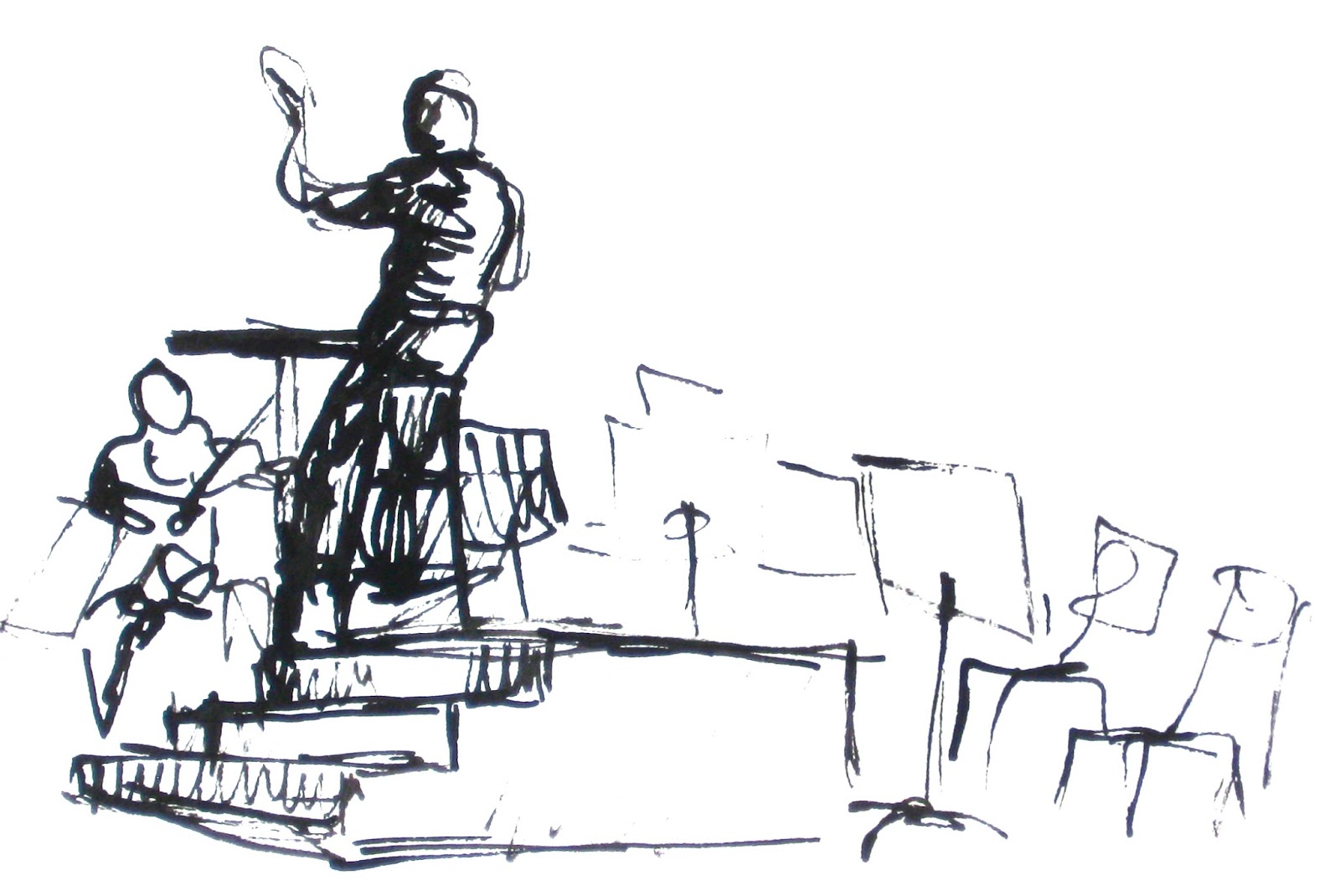
<a href='http://fineartamerica.com/featured/rehearsal-violin-soloist-and-conductor-deborah-dendler.html'><img src='http://fineartamerica.com/displayartwork.html?id=16362749&width=250&height=167' alt='Photography Prints' title='Photography Prints' style='border: none;'></a>


Where I went to art school, sculpture students were not allowed to save any of their sculptures for the first year.  Every day you sculpt a clay portrait and/or figure; every Friday, you take it apart and put the clay back in the clay cans.  After an entire year of study - making figures and portraits every day, and saving none of them - the second year sculpture student is allowed to fire or cast a "good one" every now and then.  The older I get, the more I see the wisdom of this.  The goal is learning, not cranking out a finished product.  It's lethal to an artist to be focused on a goal other than bringing a work out of your imagination and into the real world.  If you're focused on selling, that will be reflected clearly in your work, which will be commercial art, not fine art.

Commercial art has to be zappy and attention grabbing enough to stand out from the crowd.  Being advertisement oriented, it has to get its point across immediately.  Flashy photos and CGA are everywhere; they're a dime a dozen.  They make sense to people who are increasingly living their lives on a screen.  Fine art is a whole other thing.  For one thing, it takes longer to appreciate and understand.  The finer it is, the more is appreciated with every viewing.  Fine art also takes longer to create than commercial art, usually a LOT longer.  That's why there's so much less of it.

The cultural obsession on celebrities is really odd.  Celebrities and their fame are fodder for the media and promoted relentlessly.  It's as though people think that if you're famous, you must be rich, or happy, or both.  Our culture is big on instant gratification.  The world view promulgated by popular culture is that money is all you need:  buy your way into success, health and happiness.  The instant gratification idea is antithetical to really learning how to do something, because really learning how to do anything takes years of delayed gratification.  Practice, practice, practice.  Everything really worth doing in life takes discipline, hard work and usually some self sacrifice.  And practice.

Tuesday, February 23, 2016

This is how my resume should really look


Deborah Dendler
Living artist, not a zombie


Education
School of Hard Knocks
University of Bad Life Choices


Skills
Made more than 14,520 peanut butter and jelly sandwiches
Able to answer the same question hundreds of times, pleasantly
Raised two children who have turned into actual adults
Owned by Supercats Peter and Wendy
Plays with clay and colors with crayons well with grandchildren
Sees the humor of both a screaming 3 year old and/or a raging teenager
Cut up an onion at 4 PM to start dinner almost every afternoon since 1969


Accomplishments
Changed the oil on the lawnmower
Figured out why the slipcast reliefs were not drying
Figured out why the plaster molds were crummy


Goals
To be alive at 70
To be alive at 80


To be...

Tuesday, February 16, 2016

The imaginary world of the internet


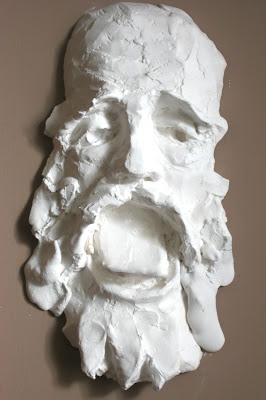
http://fineartamerica.com/featured/grimacing-man-deborah-dendler.html


The internet presence/public persona of an artist is all just make believe.  I think I'm an artist, therefore I am.  All the different social media are just different avenues of the big electronic imaginary playpen we're in.  Or is it a fishpond?

Full disclosure:  I spend an inordinate amount of time on the internet.  I don't mean wasting time at high speed on kitten videos and political rants.  I'm not goofing around, I'm working on stuff:  reading emails, researching exhibitions, writing, and posting on social media.  And here's what I think about that.

If Van Gogh had been on Facebook, I'm pretty sure he and Gauguin would have been friends, and Gauguin could have messaged, "Dude!  Not the ear!"

If Leonardo, the original poster child for ADHD, had been online, he would have accomplished pretty much zilch, because he would have been sucked into the vortex of Google, Wikipedia or OpenCourse lecture videos from MIT.

Shakespeare's Twitters would have more followers than Adele.

Botticelli could have Googled Savanarola and realized what a religious fanatic/nutjob the guy was and not burned all those magnificent paintings and drawings.

Mozart could have looked up his symptoms online and lived another 40 or 50 years.

Rembrandt would not have written an artist's statement, kept an organized résumé, or references, or any of that.  But his website would have kicked ass.

Michelangelo would have done nothing differently.  Well, maybe he would have found a few sources of marble online.

Ditto Cezanne - he would have just plugged away painting trees that look like fruit and fruit that looks like buildings.

See?  I'm not goofing around at all.  Seriously, I'm working on my blog!


Deborah Dendler website
Deborah Dendler Facebook page


Tuesday, February 9, 2016

Press release about my next hangnail


I spent the first thirty years of my life as an artist without writing a single press release.  I was brought up to be unobtrusive, to never call attention to myself.  The idea of promoting myself was so alien to me that I never even considered it.  My attitude to publicity and self promotion is perfectly summed up by Emily Dickinson's poem, "I'm Nobody."  But year after year, I kept reading press releases in the paper from an artist I don't know personally, but whose work I don't like or respect.  And every time this artist did anything, even something quite trivial, there was a press release in the paper all about it.  It was relentless, and it drove me nuts!  I finally decided that every time I get a hangnail, I would write a press release, too.  So that's what I'm doing.  I try to keep it down to once a month, and I only write about actual events:  awards, openings, national exhibitions and publications.  I don't make anything up.  I sometimes have to pack numerous nuggets of news into one release to keep it to once a month, but I don't want to overload the public.  Enough already!  I don't want to be a publicity ho.


I'm Nobody!  Who are you?  Emily Dickinson
I’m Nobody! Who are you?
Are you – Nobody – too?
Then there’s a pair of us!
Don’t tell! they’d advertise – you know!
How dreary – to be – Somebody! How public – like a Frog –  To tell one’s name – the livelong June –  To an admiring Bog!


Saturday, February 6, 2016

The saga of my studio


For years my studio was a closet, which severely limited what I could sculpt. Fortunately, in 1987, I found an ad in a local newspaper for a two-bedroom house listed for sale for $1 to anyone who could remove the one story building from a property on Main Street.  I decided it could be a workable studio, so I found a building mover, and he trucked the house to my land.  It was the best dollar I ever spent. For more than twenty five years, I've used one room as my showroom/gallery, one room as the casting room and the former living/dining room as my main work area, filled with sculpture stands, a kiln, drying racks, shelves and lots of sculptures.  A set of double doors opens onto a deck, so that trucks with heavy deliveries can back up right to the doors and unload heavy deliveries like, for example, a ton of clay.

Since I work both from my imagination and from life, I need privacy and enough room to pose a model. I need space to work simultaneously on both large and small sculptures; space for fragile terracotta sculptures in all stages of drying, away from children and animals. My materials are messy and need separate spaces: clay, plaster, epoxy and fiberglass don’t mix well.  Having adequate studio space has meant that I could accept sculpture commissions that would otherwise have been out of my reach.  My studio has also been a refuge in hard times.  Knowing I have an oasis of calm and quiet waiting for me has saved my sanity.

From the beginning, my studio was at the outer limit of what I could afford.  Years ago, if I'd had the money, I would have installed a well and septic field, but I never could afford to do that.  My version of "running water" in my studio is running for the bathroom in the house.  When I'm casting, I haul buckets of water from the house, which I think of as good upper body strengthening exercise.  But if there had been a well and septic field, I would certainly have rented it out as the two bedroom house that it is, rather than use it as a studio, especially during the single parent years when I was painfully low on money.  Actually, having no indoor plumbing turned out to be a blessing in disguise that enabled me to keep it as a studio.

This is the year I'm going to get the furnace up and running, not to mention hooked up to the propane tank, so I can work later in the fall when the weather turns cool.  Repairs to the studio are always kind of a crunch.  Right now it's extremely crunchy as I'm wondering how I'm going to get the siding replaced.  Brilliant ideas welcome!

Main work area; kiln to the right; sturdy easel for relief sculpture to the left

Casting room; buckets for hauling water and mixing plaster


deborahdendler.com